
Tudor Style: A Complete Guide to Timeless English Architecture and Interior Design

Introduction: The Enduring Appeal of Tudor Style
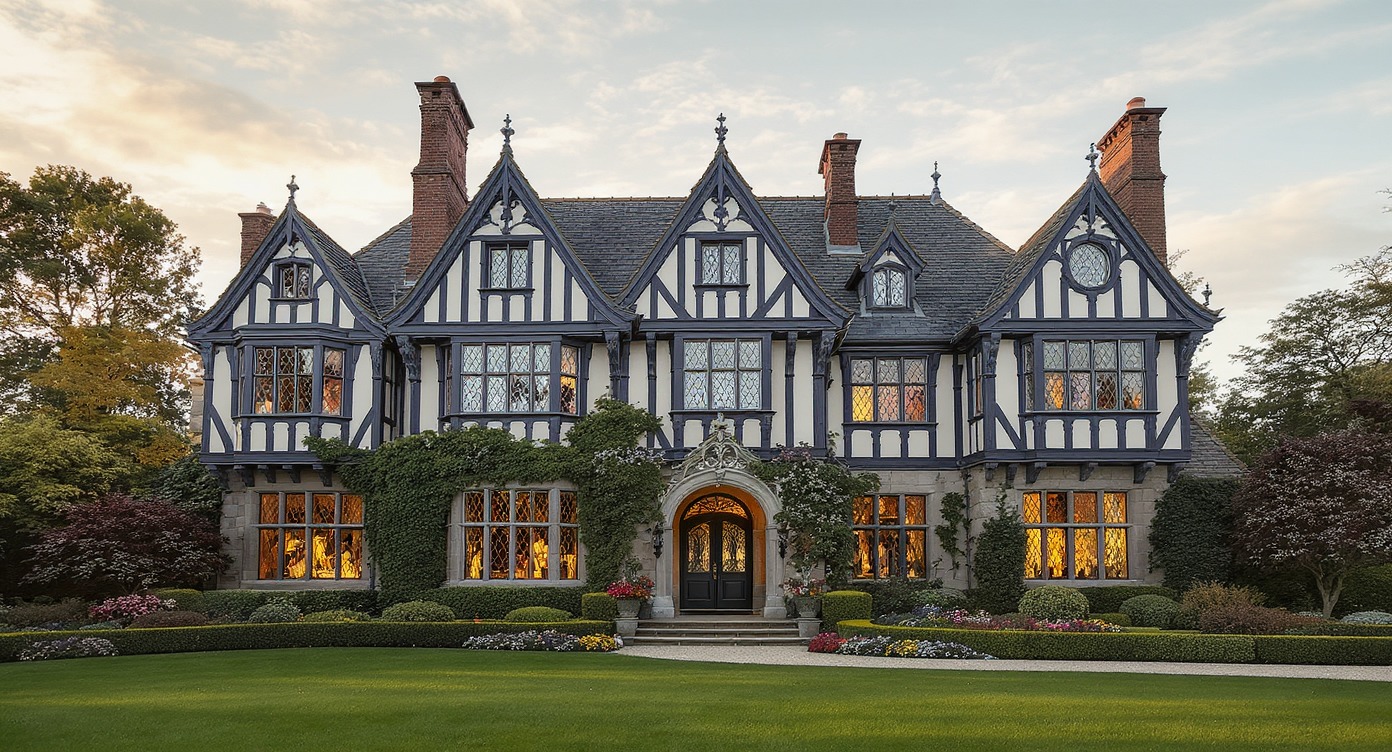
Few architectural styles evoke as much romance and historical grandeur as the Tudor style. Originating in England during the Tudor dynasty (1485-1603), this distinctive design aesthetic has captivated homeowners and designers for centuries. With its iconic half-timbered facades, steeply pitched roofs, and richly detailed interiors, Tudor style represents a perfect blend of medieval craftsmanship and residential comfort.
Whether you’re considering a Tudor-style home renovation, incorporating Tudor elements into your interior design, or simply appreciating this magnificent architectural tradition, this comprehensive guide will walk you through everything you need to know about this timeless style.
What Defines Tudor Style Architecture?
Tudor architecture is immediately recognizable by several distinctive characteristics that set it apart from other historical styles:
Exterior Features
- Half-Timbering: The most iconic Tudor feature is the decorative exposed wooden framework filled with stucco or brick, creating striking black-and-white patterns on the facade
- Steep Gabled Roofs: Dramatically pitched roofs with multiple gables and decorative bargeboards
- Tall Chimneys: Ornate, towering chimneys often featuring decorative brickwork and multiple flues
- Diamond-Paned Windows: Leaded glass windows with small diamond or rectangular panes set in metal frames
- Asymmetrical Design: Organic, irregular floor plans that evolved over time, avoiding rigid symmetry
- Masonry and Stonework: Heavy use of brick, stone, and stucco in earth-toned colors
Architectural Details That Matter
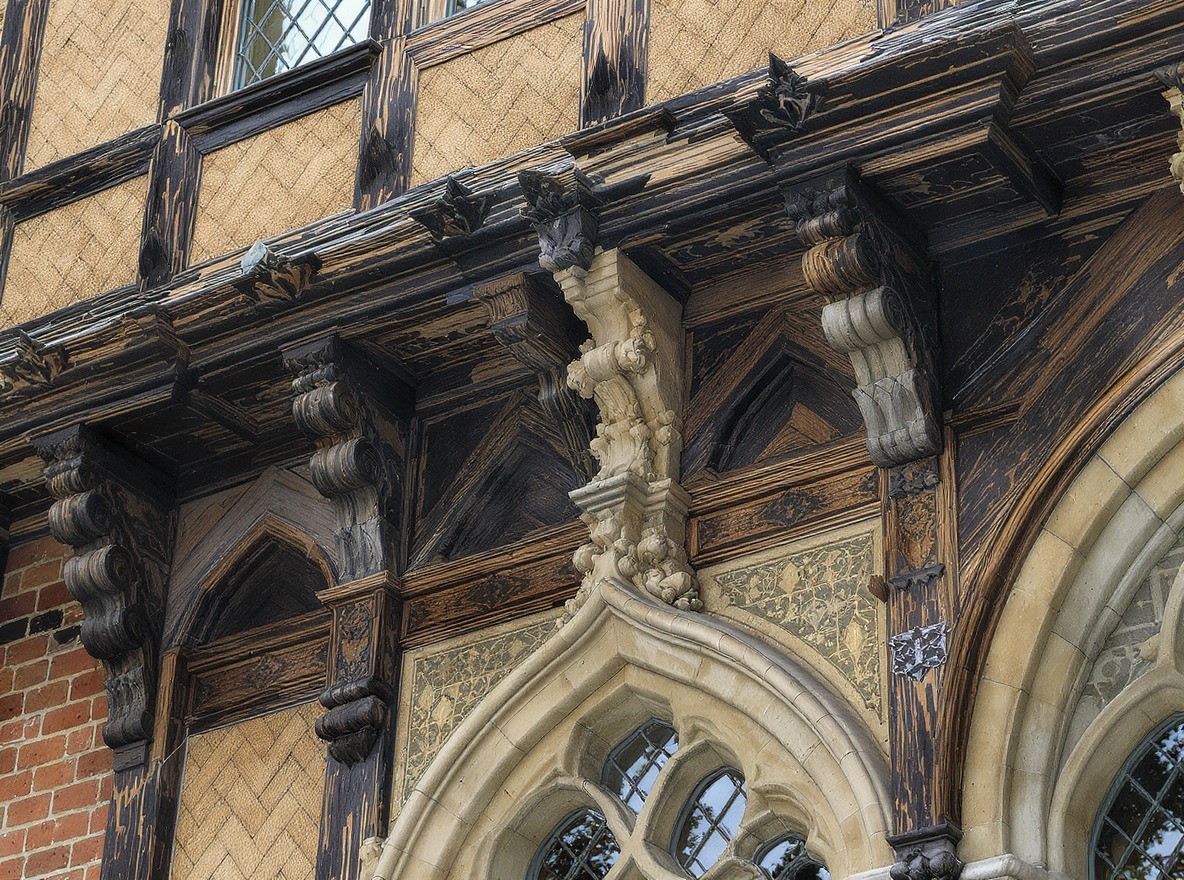
The beauty of Tudor architecture lies in its intricate details. The timber framing isn’t merely decorative—it represents authentic construction methods where wooden beams formed the structural skeleton of the building. The spaces between timbers were traditionally filled with wattle and daub (woven sticks covered with clay and plaster) or brick arranged in herringbone patterns.
Decorative elements include:
- Carved Wooden Brackets: Supporting overhanging upper floors (jetties)
- Ornamental Plasterwork: Elaborate pargeting with geometric or floral motifs
- Stone Mullions: Vertical dividers in windows creating distinctive patterns
- Decorative Doorways: Heavy wooden doors with wrought iron hardware and stone surrounds
Tudor Style Interior Design: Creating Authentic Spaces
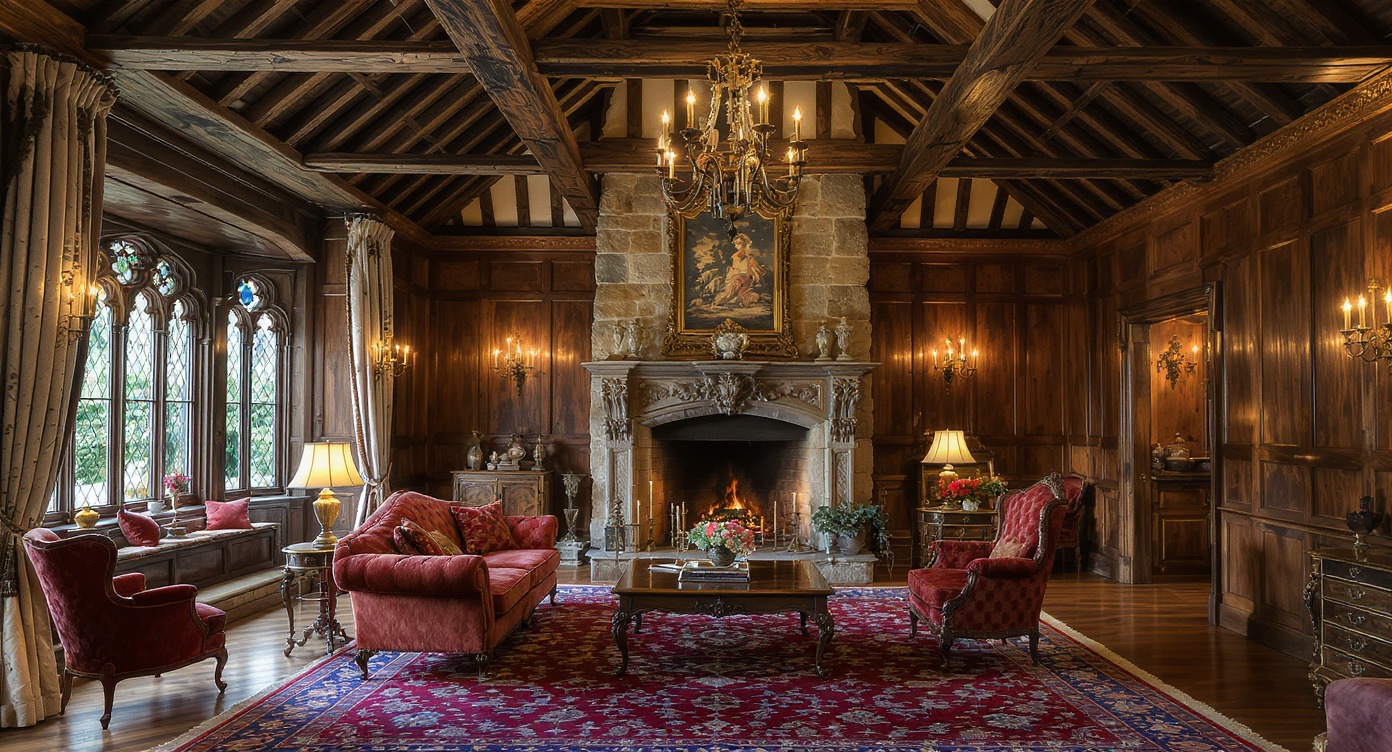
Tudor interiors are characterized by warmth, richness, and a sense of history. The style emphasizes natural materials, handcrafted details, and a color palette drawn from nature.
Key Interior Elements
1. Exposed Ceiling Beams
Dark-stained wooden beams crossing ceilings are perhaps the most recognizable Tudor interior feature. These structural elements add architectural drama and a sense of age to any room. Modern interpretations often use faux beams to achieve the look without structural modifications.
2. Wood Paneling
Rich oak paneling covering walls from floor to ceiling or wainscot-height creates warmth and acoustic comfort. The wood is typically finished in deep, warm tones that develop a beautiful patina over time.
3. Stone Fireplaces
Massive stone or brick fireplaces serve as focal points in Tudor rooms. These often feature carved mantels, inglenook seating, and decorative surrounds that showcase period craftsmanship.
4. Flooring
Traditional Tudor floors include:
- Wide-plank hardwood in oak or walnut
- Stone or slate in entryways and kitchens
- Terra cotta tiles in rustic patterns
- Persian or Turkish rugs for warmth and color
5. Windows and Natural Light
While Tudor windows are smaller than modern standards, they create beautiful dappled light through leaded glass. Interior spaces benefit from layered lighting including chandeliers, sconces, and table lamps with warm-toned shades.
Tudor Color Palette
Authentic Tudor interiors embrace rich, earthy colors:
- Primary Colors: Deep burgundy, forest green, navy blue, golden yellow
- Neutral Base: Cream, beige, warm gray, natural wood tones
- Accent Colors: Rust, copper, bronze, deep purple
- Metallics: Wrought iron, aged brass, pewter, antique gold
Furniture and Decor in Tudor Style
Period-Appropriate Furniture
Tudor furniture is characterized by solid construction, dark finishes, and minimal upholstery:
- Large Oak Tables: Refectory-style dining tables with heavy turned legs
- Carved Wooden Chairs: High-backed chairs with Gothic-inspired details
- Storage Pieces: Carved chests, court cupboards, and armoires
- Upholstered Seating: Wingback chairs and settees covered in leather, velvet, or tapestry fabric
Decorative Accessories
Complete your Tudor interior with carefully chosen accessories:
- Wrought iron chandeliers and candle sconces
- Tapestries depicting historical or nature scenes
- Pewter and copper vessels
- Heraldic shields and coats of arms
- Leather-bound books displayed on shelves
- Heavy draperies in velvet or brocade
- Carved wooden frames for mirrors and artwork
Modern Tudor: Adapting the Style for Today
While authentic Tudor homes are historical treasures, the style can be successfully adapted for contemporary living:
Tudor Revival Architecture
Popular from the 1890s through the 1940s, Tudor Revival homes reinterpret traditional elements with modern conveniences. These homes maintain the romantic exterior appearance while offering updated floor plans and amenities.
Incorporating Tudor Elements
You don’t need a period home to enjoy Tudor style. Consider these modern applications:
- Accent Walls: Add exposed beams or wood paneling to a single wall
- Statement Fireplace: Create a Tudor-inspired stone fireplace as a room focal point
- Kitchen Design: Combine Tudor-style cabinetry with modern appliances
- Lighting Fixtures: Install wrought iron chandeliers and sconces
- Window Treatments: Use leaded glass panels in existing windows or doors
- Furniture Selection: Mix Tudor-style pieces with contemporary furniture for balance
Maintaining Tudor Style Homes
Authentic Tudor homes require specialized care to preserve their historical integrity:
Structural Considerations
- Timber Frame Maintenance: Regular inspection for rot, insect damage, and structural integrity
- Roof Care: Slate or tile roofs need periodic evaluation and repair
- Window Preservation: Leaded glass requires expert restoration when damaged
- Masonry Work: Repointing brick and stone using period-appropriate materials
Interior Preservation
- Use appropriate cleaning products for historic wood surfaces
- Maintain consistent humidity levels to prevent wood warping
- Repair rather than replace original features when possible
- Consult preservation specialists for major renovations
The Cultural Significance of Tudor Style
Tudor architecture represents more than aesthetic preference—it embodies a pivotal period in English history. The Tudor dynasty saw England’s transformation from medieval kingdom to Renaissance power, and this architectural style reflects that cultural evolution.
The style’s enduring popularity speaks to our collective appreciation for craftsmanship, historical continuity, and romantic idealism. Tudor homes create an immediate emotional connection, evoking images of roaring fires, family gatherings, and timeless comfort.
Regional Variations
While Tudor style originated in England, regional interpretations developed distinct characteristics:
- English Tudor: The original style featuring authentic timber framing and regional building materials
- American Tudor Revival: Adapted versions built in the early 20th century with modern construction methods
- Jacobean Influence: Later Tudor period incorporating more Renaissance ornament
- Cottage Style: Smaller, more rustic interpretations emphasizing charm over grandeur
Conclusion: The Timeless Appeal of Tudor Style
Tudor style continues to captivate homeowners and designers with its combination of historical authenticity, architectural drama, and cozy livability. Whether you’re fortunate enough to own an authentic Tudor home, live in a Tudor Revival property, or simply want to incorporate Tudor elements into your contemporary space, this style offers endless opportunities for creating warm, character-filled environments.
The key to successful Tudor design—whether architecture or interior decoration—lies in respecting the style’s fundamental principles: quality craftsmanship, natural materials, rich colors, and attention to detail. By honoring these traditions while adapting them to modern needs, you can create spaces that feel both historically grounded and comfortably contemporary.
As we continue to appreciate handcrafted quality and architectural heritage in an increasingly mass-produced world, Tudor style reminds us of the enduring value of beauty, permanence, and connection to the past. It’s not merely a design choice—it’s a celebration of craftsmanship, history, and the timeless human desire to create homes of lasting beauty.
Introduction: The Enduring Appeal of Tudor Style
Few architectural styles evoke as much romance and historical grandeur as the Tudor style. Originating in England during the Tudor dynasty (1485-1603), this distinctive design aesthetic has captivated homeowners and designers for centuries. With its iconic half-timbered facades, steeply pitched roofs, and richly detailed interiors, Tudor style represents a perfect blend of medieval craftsmanship and residential comfort.
Whether you’re considering a Tudor-style home renovation, incorporating Tudor elements into your interior design, or simply appreciating this magnificent architectural tradition, this comprehensive guide will walk you through everything you need to know about this timeless style.
What Defines Tudor Style Architecture?
Tudor architecture is immediately recognizable by several distinctive characteristics that set it apart from other historical styles:
Exterior Features
- Half-Timbering: The most iconic Tudor feature is the decorative exposed wooden framework filled with stucco or brick, creating striking black-and-white patterns on the facade
- Steep Gabled Roofs: Dramatically pitched roofs with multiple gables and decorative bargeboards
- Tall Chimneys: Ornate, towering chimneys often featuring decorative brickwork and multiple flues
- Diamond-Paned Windows: Leaded glass windows with small diamond or rectangular panes set in metal frames
- Asymmetrical Design: Organic, irregular floor plans that evolved over time, avoiding rigid symmetry
- Masonry and Stonework: Heavy use of brick, stone, and stucco in earth-toned colors
Architectural Details That Matter
The beauty of Tudor architecture lies in its intricate details. The timber framing isn’t merely decorative—it represents authentic construction methods where wooden beams formed the structural skeleton of the building. The spaces between timbers were traditionally filled with wattle and daub (woven sticks covered with clay and plaster) or brick arranged in herringbone patterns.
Decorative elements include:
- Carved Wooden Brackets: Supporting overhanging upper floors (jetties)
- Ornamental Plasterwork: Elaborate pargeting with geometric or floral motifs
- Stone Mullions: Vertical dividers in windows creating distinctive patterns
- Decorative Doorways: Heavy wooden doors with wrought iron hardware and stone surrounds
Tudor Style Interior Design: Creating Authentic Spaces
Tudor interiors are characterized by warmth, richness, and a sense of history. The style emphasizes natural materials, handcrafted details, and a color palette drawn from nature.
Key Interior Elements
1. Exposed Ceiling Beams
Dark-stained wooden beams crossing ceilings are perhaps the most recognizable Tudor interior feature. These structural elements add architectural drama and a sense of age to any room. Modern interpretations often use faux beams to achieve the look without structural modifications.
2. Wood Paneling
Rich oak paneling covering walls from floor to ceiling or wainscot-height creates warmth and acoustic comfort. The wood is typically finished in deep, warm tones that develop a beautiful patina over time.
3. Stone Fireplaces
Massive stone or brick fireplaces serve as focal points in Tudor rooms. These often feature carved mantels, inglenook seating, and decorative surrounds that showcase period craftsmanship.
4. Flooring
Traditional Tudor floors include:
- Wide-plank hardwood in oak or walnut
- Stone or slate in entryways and kitchens
- Terra cotta tiles in rustic patterns
- Persian or Turkish rugs for warmth and color
5. Windows and Natural Light
While Tudor windows are smaller than modern standards, they create beautiful dappled light through leaded glass. Interior spaces benefit from layered lighting including chandeliers, sconces, and table lamps with warm-toned shades.
Tudor Color Palette
Authentic Tudor interiors embrace rich, earthy colors:
- Primary Colors: Deep burgundy, forest green, navy blue, golden yellow
- Neutral Base: Cream, beige, warm gray, natural wood tones
- Accent Colors: Rust, copper, bronze, deep purple
- Metallics: Wrought iron, aged brass, pewter, antique gold
Furniture and Decor in Tudor Style
Period-Appropriate Furniture
Tudor furniture is characterized by solid construction, dark finishes, and minimal upholstery:
- Large Oak Tables: Refectory-style dining tables with heavy turned legs
- Carved Wooden Chairs: High-backed chairs with Gothic-inspired details
- Storage Pieces: Carved chests, court cupboards, and armoires
- Upholstered Seating: Wingback chairs and settees covered in leather, velvet, or tapestry fabric
Decorative Accessories
Complete your Tudor interior with carefully chosen accessories:
- Wrought iron chandeliers and candle sconces
- Tapestries depicting historical or nature scenes
- Pewter and copper vessels
- Heraldic shields and coats of arms
- Leather-bound books displayed on shelves
- Heavy draperies in velvet or brocade
- Carved wooden frames for mirrors and artwork
Modern Tudor: Adapting the Style for Today
While authentic Tudor homes are historical treasures, the style can be successfully adapted for contemporary living:
Tudor Revival Architecture
Popular from the 1890s through the 1940s, Tudor Revival homes reinterpret traditional elements with modern conveniences. These homes maintain the romantic exterior appearance while offering updated floor plans and amenities.
Incorporating Tudor Elements
You don’t need a period home to enjoy Tudor style. Consider these modern applications:
- Accent Walls: Add exposed beams or wood paneling to a single wall
- Statement Fireplace: Create a Tudor-inspired stone fireplace as a room focal point
- Kitchen Design: Combine Tudor-style cabinetry with modern appliances
- Lighting Fixtures: Install wrought iron chandeliers and sconces
- Window Treatments: Use leaded glass panels in existing windows or doors
- Furniture Selection: Mix Tudor-style pieces with contemporary furniture for balance
Maintaining Tudor Style Homes
Authentic Tudor homes require specialized care to preserve their historical integrity:
Structural Considerations
- Timber Frame Maintenance: Regular inspection for rot, insect damage, and structural integrity
- Roof Care: Slate or tile roofs need periodic evaluation and repair
- Window Preservation: Leaded glass requires expert restoration when damaged
- Masonry Work: Repointing brick and stone using period-appropriate materials
Interior Preservation
- Use appropriate cleaning products for historic wood surfaces
- Maintain consistent humidity levels to prevent wood warping
- Repair rather than replace original features when possible
- Consult preservation specialists for major renovations
The Cultural Significance of Tudor Style
Tudor architecture represents more than aesthetic preference—it embodies a pivotal period in English history. The Tudor dynasty saw England’s transformation from medieval kingdom to Renaissance power, and this architectural style reflects that cultural evolution.
The style’s enduring popularity speaks to our collective appreciation for craftsmanship, historical continuity, and romantic idealism. Tudor homes create an immediate emotional connection, evoking images of roaring fires, family gatherings, and timeless comfort.
Regional Variations
While Tudor style originated in England, regional interpretations developed distinct characteristics:
- English Tudor: The original style featuring authentic timber framing and regional building materials
- American Tudor Revival: Adapted versions built in the early 20th century with modern construction methods
- Jacobean Influence: Later Tudor period incorporating more Renaissance ornament
- Cottage Style: Smaller, more rustic interpretations emphasizing charm over grandeur
Conclusion: The Timeless Appeal of Tudor Style
Tudor style continues to captivate homeowners and designers with its combination of historical authenticity, architectural drama, and cozy livability. Whether you’re fortunate enough to own an authentic Tudor home, live in a Tudor Revival property, or simply want to incorporate Tudor elements into your contemporary space, this style offers endless opportunities for creating warm, character-filled environments.
The key to successful Tudor design—whether architecture or interior decoration—lies in respecting the style’s fundamental principles: quality craftsmanship, natural materials, rich colors, and attention to detail. By honoring these traditions while adapting them to modern needs, you can create spaces that feel both historically grounded and comfortably contemporary.
As we continue to appreciate handcrafted quality and architectural heritage in an increasingly mass-produced world, Tudor style reminds us of the enduring value of beauty, permanence, and connection to the past. It’s not merely a design choice—it’s a celebration of craftsmanship, history, and the timeless human desire to create homes of lasting beauty.


